

How SpecSlide Sliding Doors Helped UM–Dearborn Rethink Small Office Design for Hybrid Work
Key Takeaways
- The University of Michigan–Dearborn modernized office environments to support a hybrid work model with the renovation of the Renick University Center.
- Neumann/Smith Architecture designed adaptable offices and specified the SpecSlide Sliding Door System from Special-Lite for space efficiency.
- The design improved functionality, aesthetics, and cost efficiency while using durable materials that require low maintenance.
- The project led to significant space savings and supported sustainability goals by enhancing collaboration and reducing heating and cooling demands.
- The success of the SpecSlide system resulted in its specification for future office renovations, setting a new standard for design.
Overview
The University of Michigan–Dearborn wanted to modernize its office environments and align with an evolving hybrid work model across multiple buildings. That included the Renick University Center (RUC), which officially reopened to the students, staff, and faculty in early 2025. Neumann/Smith Architecture worked with The Eisen Group, a Special-Lite representative, to develop efficient, flexible, and visually cohesive workspace solutions.
The goal: streamline department layouts, reduce spatial footprints, and create a unified design standard that supports in-person and remote work office schedules.
Challenge
The University of Michigan–Dearborn initiated a Return to Work Study to reimagine office use across departments. The study assessed the number of employees on campus daily, identified opportunities for shared spaces, and helped develop size standards for spaces across various roles.
Neumann/Smith then designed adaptable, standardized offices that balanced functionality, comfort, and cost efficiency. As office footprints tightened — often to under 100 square feet — traditional swinging doors posed significant space-planning limitations.
At the same time, UM–Dearborn sought durable, low-maintenance materials that would maintain a professional aesthetic and meet budget constraints.
The Solution
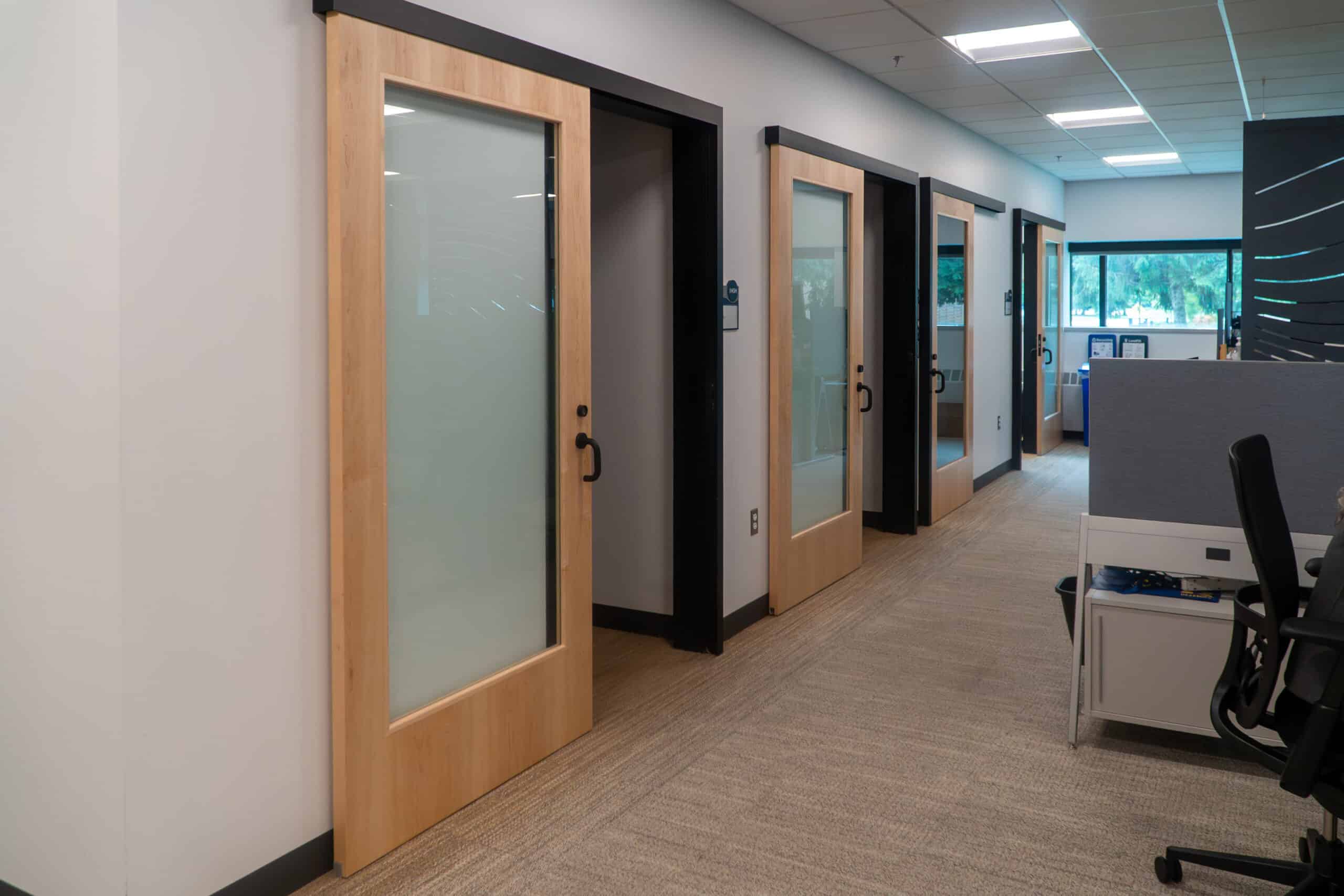
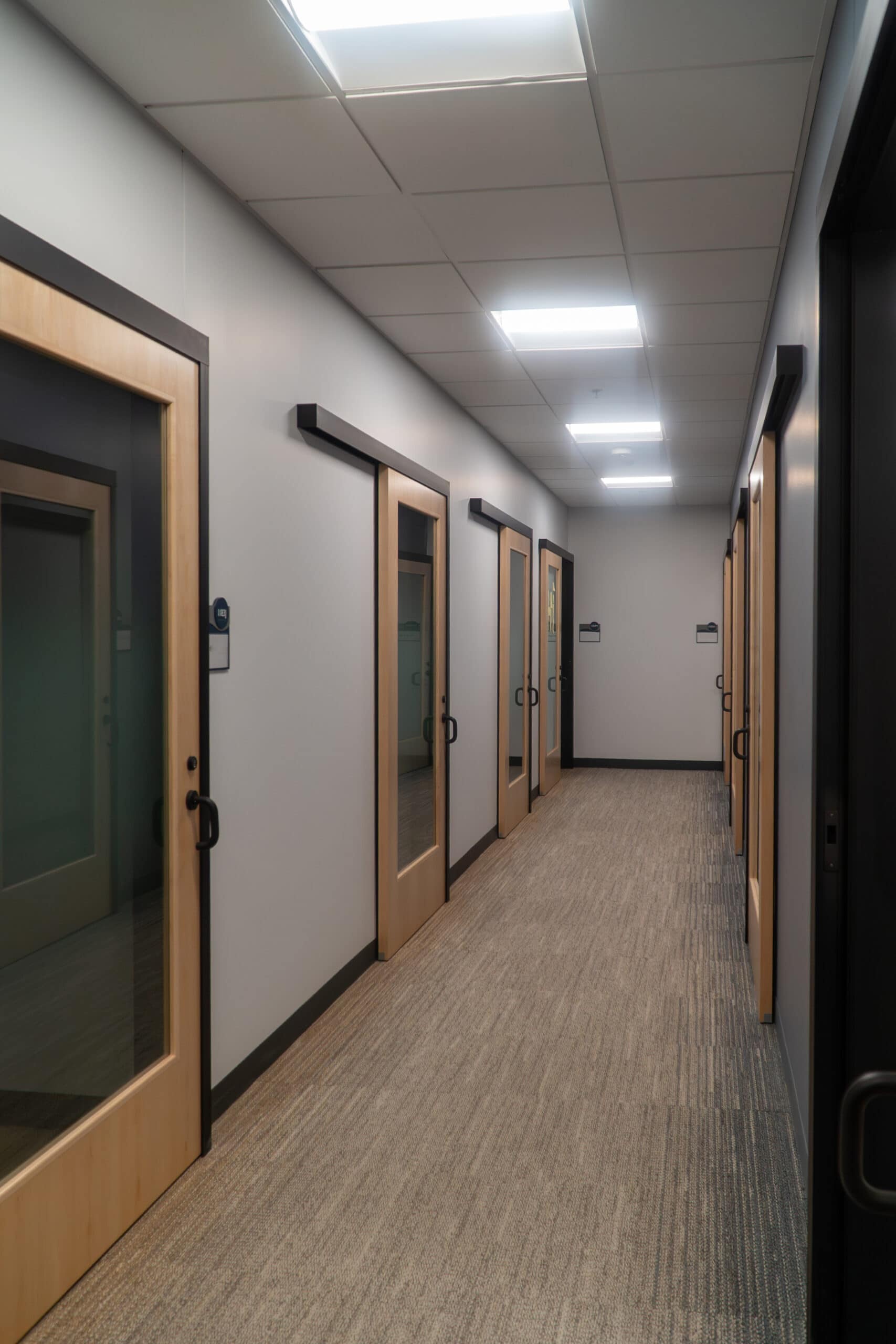
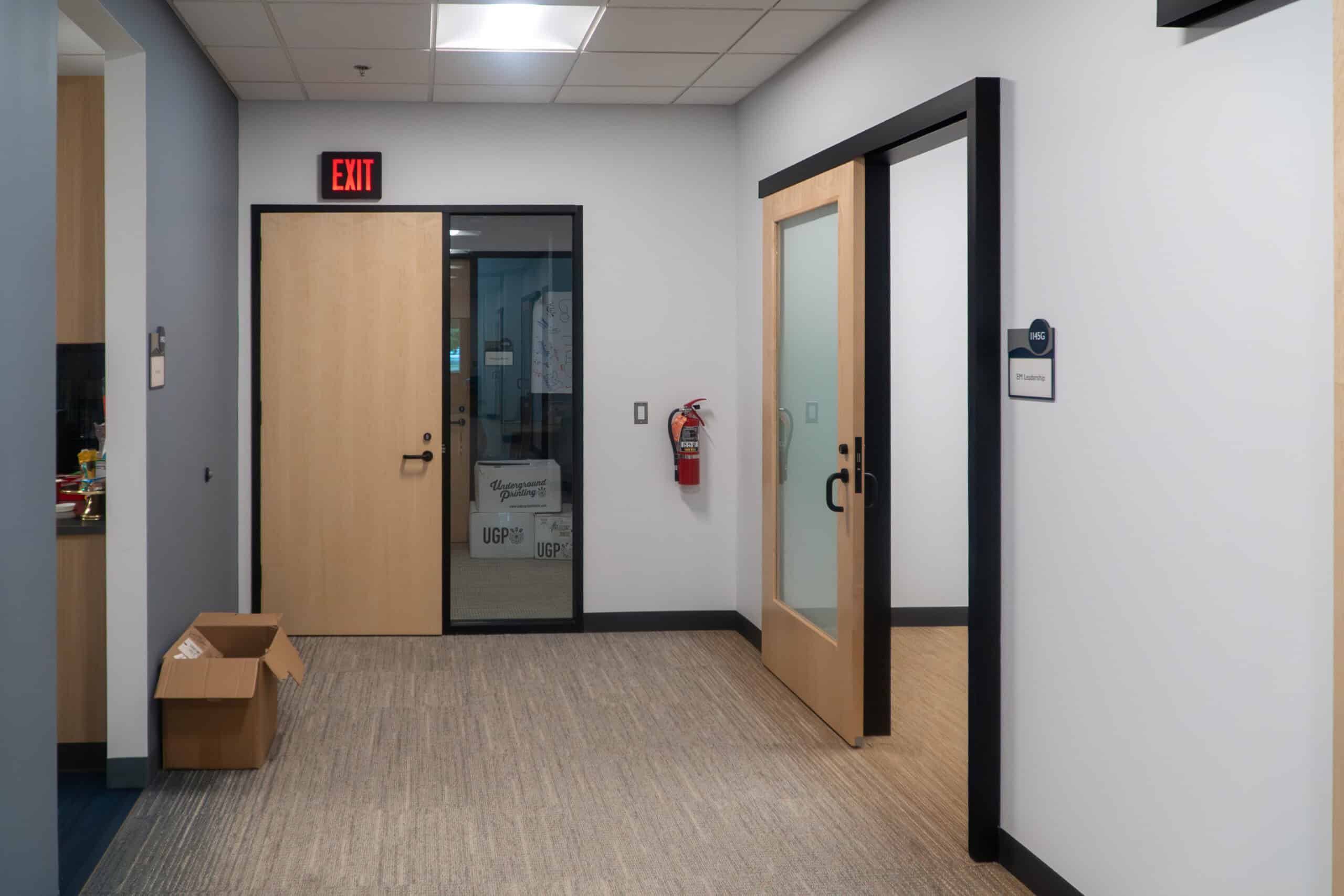
To achieve the desired efficiency and design, Neumann/Smith specified the SpecSlide Sliding Door System from Special-Lite. SpecSlide’s configuration eliminated the clearance needed for swinging doors, allowing the team to reclaim valuable square footage while creating clean, streamlined corridors throughout the renovated building.
“It helps them reduce their footprint, make people feel more comfortable,” said Sara Sarkisian Bell, Senior Project Manager for Neumann/Smith.
Finding a door solution that brought folks closer together, to collaborate more was really positive, she added.
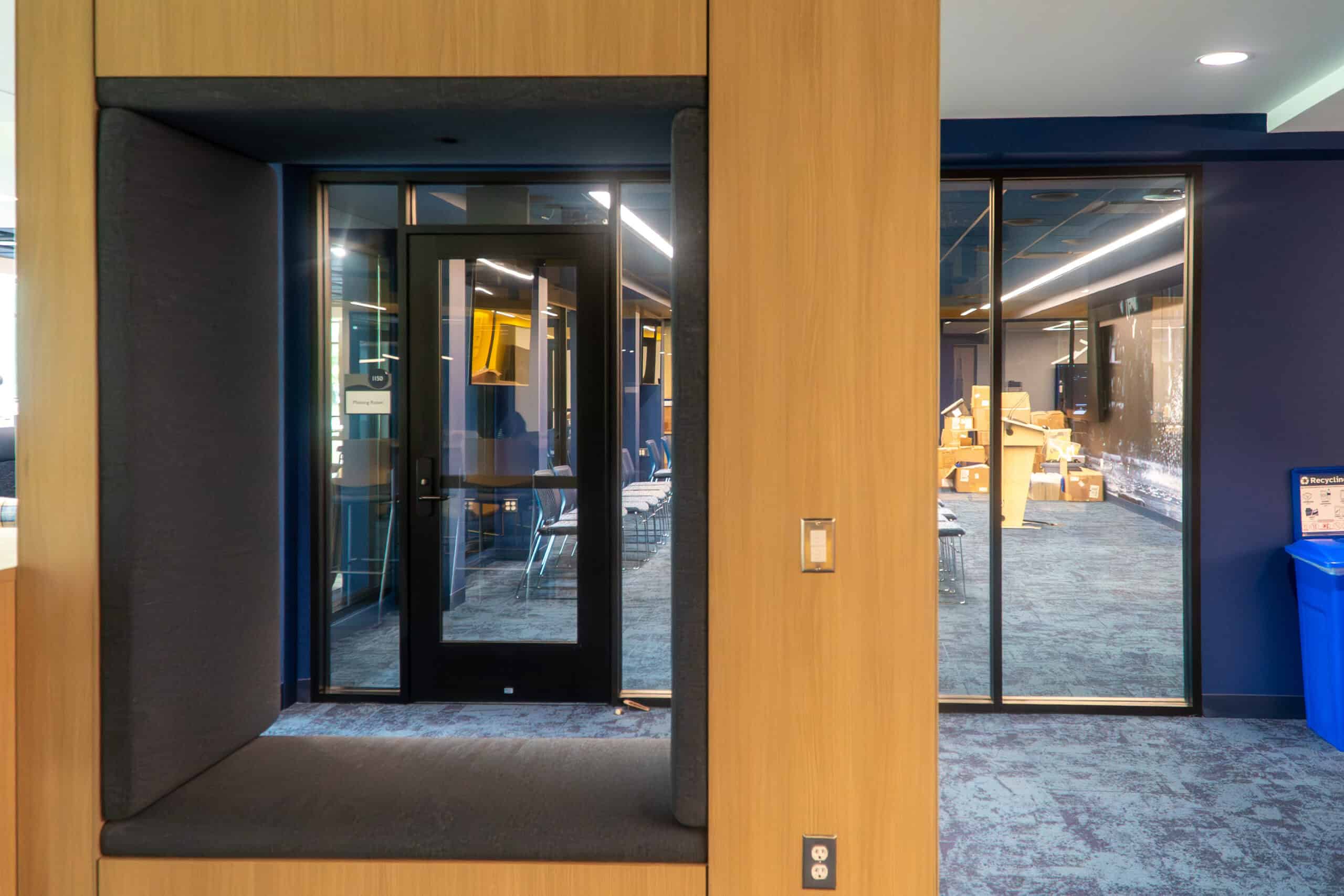
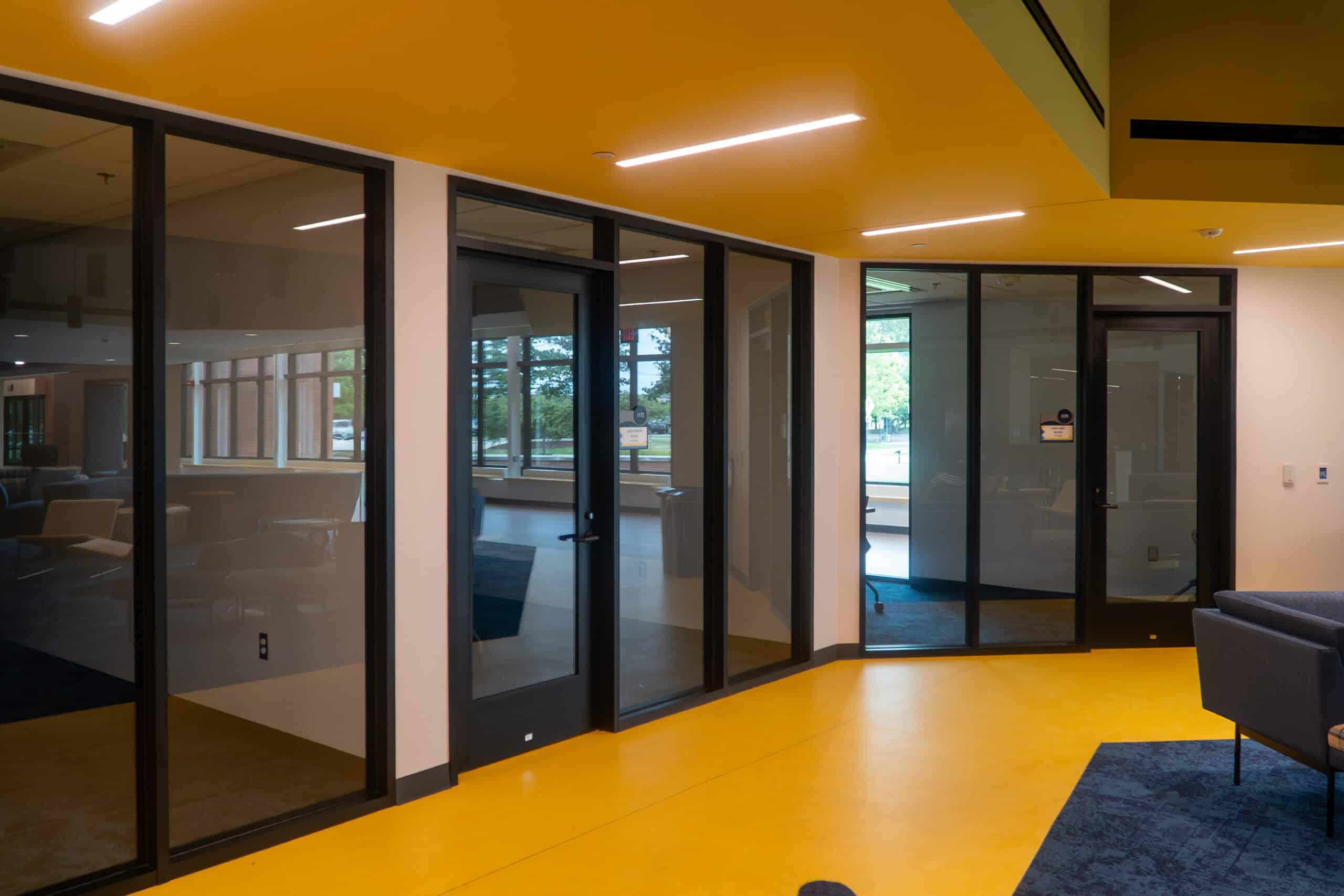
In addition to SpecSlide, Neumann/Smith leveraged Special-Lite’s Omega Interior Aluminum Framing System, a familiar go-to, known for its sleek profiles and prefinished durability.
Outcome
The results exceeded expectations. The new spaces achieved significant space savings, enabling smaller offices without compromising comfort or functionality. Clean, modern aesthetics were another benefit.
Thanks to durable aluminum framing and prefinished materials, facilities teams will also benefit from reduced maintenance going forward.
Another huge benefit was cost efficiency. Pricing was comparable to traditional hollow metal framing, but it offered higher design flexibility.
The success of this installation led to the specification of the SpecSlide Sliding Door System in a subsequent University of Michigan–Dearborn office renovation, a testament to strong performance and client satisfaction.
“The slider’s a really good solution we’re now suggesting across the board — especially for offices under 100 square feet,” Bell said.
Beyond spatial and budgetary gains, the redesign supported the university’s sustainability goals. Shared and right-sized offices reduce overall heating, cooling, and lighting demand while fostering closer collaboration among in-office staff.
The transformation demonstrates how thoughtful design and innovative product integration can redefine space efficiency in a hybrid work environment or where spaces are shared. Special-Lite’s SpecSlide, together with functionality and aesthetics, helped set a new standard for future office renovations across campus.
Inspiration Gallery
More Resources
Reach out to your local Special-Lite Rep to build a solution to your needs. And be sure to download a PDF of this Case Study.